Glass Molding Machine Price: Market Factors Influencing Equipment Investment
Automotive glass encapsulation equipment cannot be priced meaningfully by clamping force alone. The investment also reflects injection capacity, mold access, material control, automation, utilities, testing, and service. A rubber injection molding machine for auto glass encapsulation should therefore be evaluated against a defined pane and production plan.
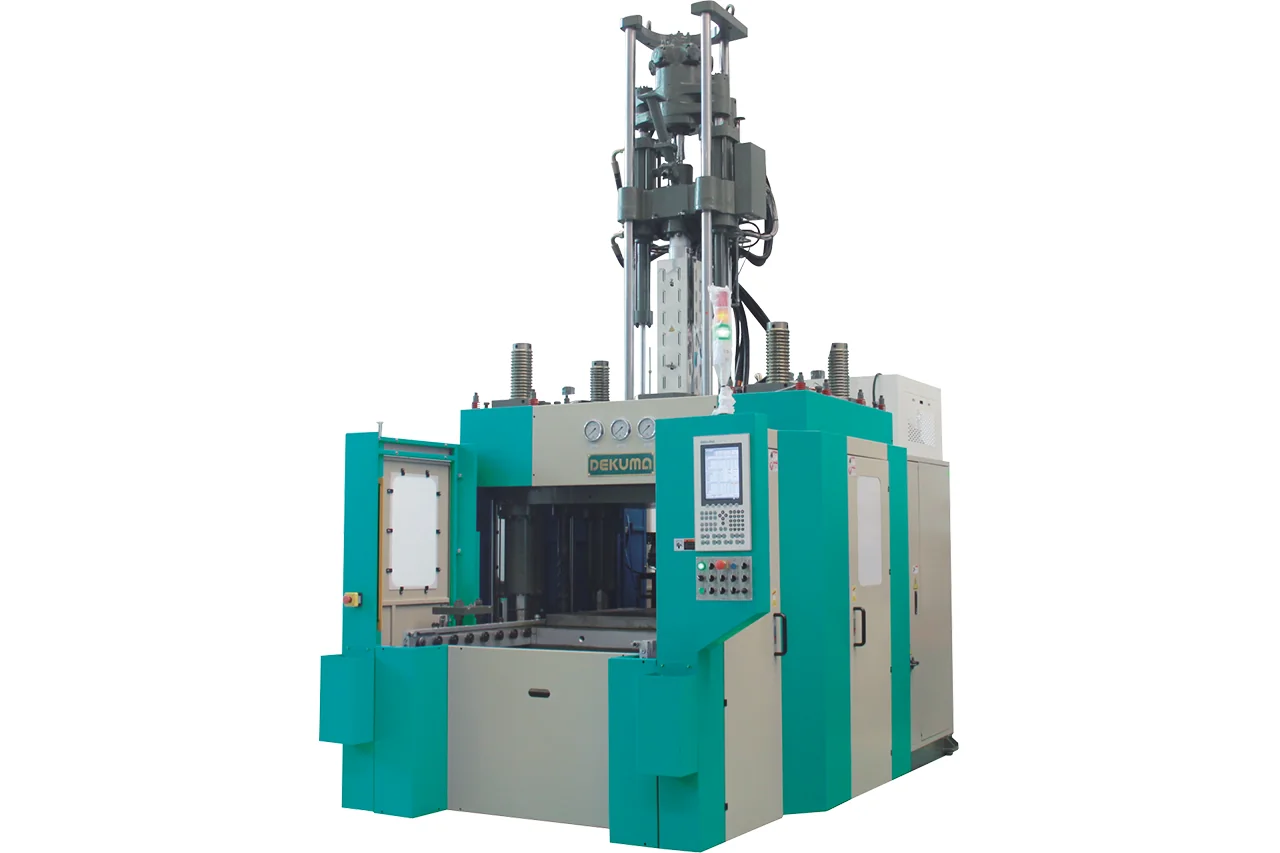
Glass molding machine price varies because large windows and triangular glazing require different molds, handling paths, and output targets. A lower quotation may omit equipment needed for stable loading, inspection, or material changeover. A higher quotation may include capacity that the factory will rarely use.
Product geometry determines the machine foundation
Pane dimensions and edge design establish mold area, opening space, shot volume, and projected cavity pressure. Broad glazing also needs even clamping to protect the glass and preserve the sealing profile. These requirements influence machine structure before optional automation is considered.
Dekuma uses a fixed lower platen, movable upper platen, and four-column clamping system for its glass platform. The arrangement distributes force across the mold while a low working level supports practical loading and service access.
The two published glass configurations span 250 and 400 tons of clamping force for different pane and mold requirements. The two published configurations share an injection pressure of 1,840 kg/cm², a theoretical volume of 546 cc, a 242 cc/s injection rate, a 600 mm opening stroke, and a maximum opening distance of 1,000 mm.
The appropriate model depends on the mold footprint, calculated pressure, runner, part volume, and operating margin. Oversizing increases capital, power infrastructure, and floor demand. Insufficient capacity can restrict process development and create recurring quality risk.
Material systems influence operating cost
The glass molding machine price includes the capability needed to prepare and deliver TPV consistently. TPE, flexible modified PVC, and other suitable materials may require different temperature, pressure, cleaning, and changeover arrangements.
The vertical FIFO path limits the residence of older chamber material by moving it toward the mold before newer material. Faster renewal can reduce downtime and discarded compound during approved changes. Its economic value depends on the factory’s color range, material schedule, cleaning standard, and frequency of changeovers.
Servo-driven hydraulic control matches output to requested pressure and flow. Dekuma states that the system can reduce energy consumption by up to 60 percent versus traditional proportional control under its comparison conditions. Buyers should model savings using the intended cycle and local utility cost.
Energy analysis should include heating, cooling, pumps, robots, handling devices, and standby periods. Cost per accepted window is more useful than an isolated machine reading because scrap and interrupted cycles consume energy without producing saleable output.
Automation changes both capital and labor exposure
One-step encapsulation removes the separate manufacture and manual attachment of a sealing strip. This can reduce intermediate handling, work-in-process, and alignment variation. The financial effect depends on existing labor, floor space, takt time, and the value of avoided defects.
Loading and take-out systems must support the pane without contamination, scratching, or distortion. Grippers, locating fixtures, sensors, guarding, and conveyors add cost but may be necessary for a stable cycle. Each device should be linked to a measurable production requirement.
Mixed-product plants may value flexible fixtures and fast recipe changes more than maximum automated speed. High-volume dedicated lines may justify integrated handling and inspection. Comparing these operating models prevents automation level from becoming a substitute for a clear capacity study.
Safety integration and recovery design also affect investment. A cell that stops safely but requires lengthy manual restoration can lose substantial availability. Acceptance testing should include misplacement, interrupted movement, power recovery, and access procedures.
Lifecycle economics complete the comparison
A rubber injection molding machine for auto glass encapsulation requires mold maintenance, hydraulic service, sensor checks, temperature calibration, and trained personnel. Spare parts and technical response influence downtime exposure. These lifecycle items should be included beside purchase and installation cost.
Quotations for glass molding machine price should state the assumed pane, mold, material, automation boundary, utilities, acceptance output, and service scope. Without the same basis, a lower figure may simply exclude functions or commissioning work required to produce an acceptable encapsulated assembly.
Pre-delivery trials with representative glass, material, and tooling can reduce commissioning uncertainty. Sample quality, cycle stability, energy, changeover, and handling should be recorded. Unresolved site differences need a defined action owner and completion criterion.
Financing and depreciation can affect the preferred configuration even when two cells have similar technical capability. Buyers should model the timing of installation, ramp-up losses, expected utilization, and the useful life of dedicated fixtures. A flexible system may carry a higher initial cost but retain more value when vehicle programs change.
Warranty scope also deserves comparison. Coverage periods, excluded wear items, travel costs, remote response, and responsibility for third-party automation can materially alter risk. These terms should be normalized before quotations are compared.
Glass molding machine price should be viewed as the cost of establishing and sustaining an acceptable encapsulation process. Equipment capacity, energy, automation, commissioning, scrap, maintenance, and support all contribute. A disciplined total-cost comparison makes unlike quotations easier to evaluate without reducing the decision to one headline number. Documented assumptions keep the comparison transparent.