How Augmented Reality Is Being Used for Feed Mill Maintenance Training
Maintenance training in feed mills is becoming more visual as equipment grows more sophisticated and technicians face tighter production schedules. Feed making machine instruction no longer needs to depend entirely on manuals, classroom demonstrations, or memory-based procedures. Augmented reality (AR) can place digital instructions, component labels, safety reminders, and inspection sequences directly within a technician’s field of view. FAMSUN’s experience across feed processing applications can help illustrate how digital tools can support practical training without replacing established maintenance procedures.
Why AR Fits Modern Maintenance Training
Traditional training often separates explanation from physical practice. Technicians may study diagrams first and only later encounter the actual equipment, creating a gap between theoretical knowledge and hands-on work. AR narrows that distance by connecting visual instructions with the component being inspected.
During a training session, digital overlays can identify bearings, drive assemblies, lubrication points, guards, sensors, and other service areas. Instead of searching through several pages to locate the correct component, a technician can follow a visual sequence positioned near the relevant part. Such guidance can be particularly useful for personnel who are still becoming familiar with complex machinery.
Another advantage comes from consistency. Different trainers may explain the same maintenance procedure with slightly different wording or emphasis. AR content can standardize the sequence while still allowing experienced technicians to apply professional judgment. Training records can also capture which procedures were reviewed, creating a useful reference for later assessments.
Building Useful AR Maintenance Overlays
Effective AR training starts with accurate equipment documentation. Three-dimensional models, maintenance manuals, component drawings, inspection intervals, and service procedures can be combined into digital training content. Poor source information, however, can produce confusing overlays regardless of how advanced the headset may be.
Visual instructions should remain concise. Rather than filling the technician’s view with paragraphs of text, an overlay might identify a component, display the required inspection point, and provide the next action. Colour-coded markers, arrows, exploded views, and short prompts can help distinguish different stages of a procedure.
Equipment complexity also influences the training design. A technician working with a pellet mill may need guidance related to drive components, rollers, bearings, or adjustment mechanisms, while another machine may require attention to dosing, conveying, or mixing systems. AR content works best when it reflects the actual maintenance sequence instead of presenting generic instructions.
Applying AR to Different Maintenance Scenarios
Routine inspections provide one practical starting point. Technicians can use headset prompts to move through predefined checkpoints, checking lubrication conditions, fasteners, guards, wear indicators, and other designated areas. Each checkpoint can be linked to reference images or acceptable inspection criteria.
More detailed training can involve troubleshooting simulations. Suppose unusual vibration is detected around a mechanical assembly. AR can present possible inspection routes, helping trainees examine likely causes in a logical order. Such simulations give inexperienced personnel an opportunity to practice diagnostic thinking before working under real production pressure.
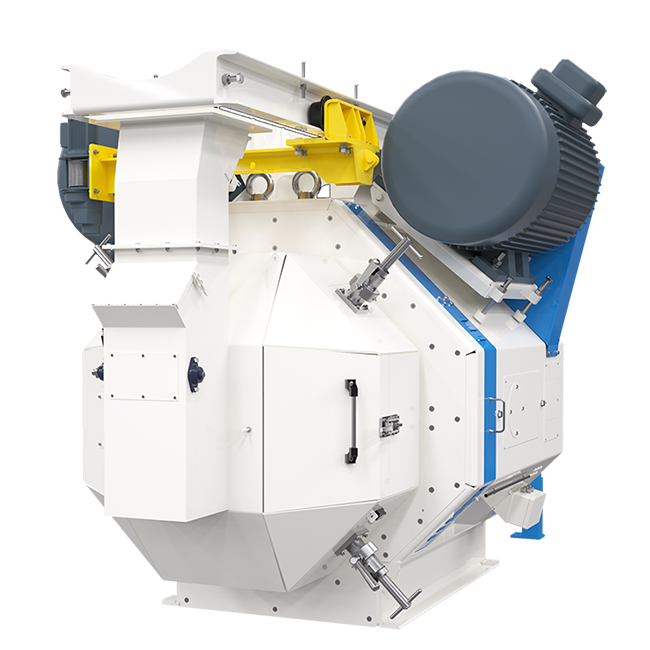
Equipment examples also matter. Training content for a piece of equipment such as the FAMSUN MUZL 00 Series Belt Pellet Mill—available in two-roll and three-roll configurations for aquafeed, pig, poultry, fish, and ruminant feeds—can use AR overlays to distinguish model-specific maintenance points, helping technicians understand why procedures may vary between configurations.
Connecting AR With Digital Maintenance Data
AR is most effective when it connects with existing maintenance information rather than functioning as an isolated training application. Equipment identifiers can link to service histories, inspection records, spare-part information, and scheduled tasks.
Technicians could scan a machine or component and access relevant maintenance data through the headset. Such integration may reduce the need to switch repeatedly between physical equipment and separate digital terminals. Historical records can also provide context when recurring issues appear in the same component.
Data quality remains important. Incorrect maintenance intervals or outdated component information can make digital guidance unreliable. Regular content reviews should form part of the AR program, particularly after equipment modifications, process changes, or software updates.
Measuring Training Results and Repair Quality
Technology adoption should be assessed through practical outcomes rather than novelty. Useful indicators include training completion time, assessment scores, repeated procedural mistakes, first-time repair success, and the number of assistance requests from inexperienced technicians.
AR can also support knowledge retention. Short refresher modules may be assigned before infrequent maintenance tasks, allowing technicians to review critical steps without repeating an entire classroom course. Supervisors can compare assessment results over time and identify procedures that require additional explanation.
Safety deserves separate attention. Digital prompts can remind technicians about isolation procedures, protective equipment, access restrictions, and other precautions before physical work begins. Such reminders should complement formal safety rules rather than substitute for them.
Building a Sustainable AR Training Program
Successful implementation does not require every maintenance activity to become an AR exercise. High-risk, complicated, or infrequently performed procedures generally offer stronger opportunities than simple tasks already mastered by experienced personnel. Selecting suitable scenarios keeps the training system practical.
Content should also evolve alongside machinery. New components, revised service intervals, and updated maintenance practices need to be reflected in the digital model. Feedback from technicians can reveal whether overlays are easy to interpret or whether excessive visual information slows the task.
For organizations evaluating this approach, the focus should be on whether AR helps people understand equipment more clearly and perform procedures more consistently, rather than on the technology itself. FAMSUN’s broad range of feed-processing equipment shows why model-specific digital training can be valuable, particularly in facilities where multiple machine configurations and feed applications coexist.
Conclusion
Maintenance knowledge becomes more accessible when digital instructions are placed directly within the physical work environment. AR can support feed making machine training when visual guidance is built from reliable technical documentation, adapted to specific equipment, and connected with measurable learning objectives. Feed machine maintenance can then move beyond static manuals toward interactive instruction that supports inspection, troubleshooting, and refresher learning. Used selectively rather than as a universal solution, AR represents a practical method for developing technical skills while keeping hands-on expertise at the center of maintenance work.